A gas continuous-flow unit suits a home with a solid natural gas connection and a household that draws hot water in long back-to-back bursts, while an electric heat pump suits a home with no gas connection, a home with solar panels, or an owner whose first concern is lower running costs. Either one can be the right answer for the right house.
Below I walk through the gas vs electric hot water decision the way I talk it through standing in a side yard in Hurstville: how each kind of hot water system heats water, what really drives the running costs, what the installation involves, which government rebates and energy ratings matter and which households end up happiest with each option.
I'm George, and GSK Plumbing Solutions does residential maintenance plumbing across Hurstville and the St George area of southern Sydney.
Gas vs Electric Hot Water: The Short Answer
If your home already has gas and the gas lines are in good order, a continuous-flow gas unit is the simplest swap and it will not run out of hot water.
If your home has no gas connection, or you own solar panels, an electric heat pump is usually the better long-term buy because it uses a fraction of the energy of an old electric tank.
If your home has an electric storage tank on an off peak tariff and nobody is complaining, the cheapest sensible move is often a like-for-like replacement with a modern electric system rather than a change of fuel.
The rest of this guide explains why, so you can tell which of those three homes is yours.
How Each Type Of Hot Water System Heats Water
There are only a few ways to heat water in an Australian home, and the differences between them explain almost every cost and comfort question people ask me. Most Australian households are choosing between four of them, and which hot water system depends on the fuel at the street, the roof above you and the way your family uses hot water.
The first split is storage against instantaneous. A storage tank heats a volume of water and holds it ready. An instantaneous or continuous flow unit heats water only as it passes through, so there is no tank sitting there losing heat.
The second split is the energy source: natural gas, electricity, or sunshine through solar hot water or a solar PV system.
Electric Hot Water: Storage Tanks, Heat Pumps And Instantaneous Electric Systems
A conventional electric hot water system is a storage tank with one or two heating elements inside. The element is essentially a metal rod that heats up and transfers that heat to the water. It uses electric resistance heating, which is simple, cheap to install and reliable. An electric element converts almost all the electricity it uses into heat, which sounds ideal until you realise it can never do better than that: every unit of electricity gives you roughly one unit of heat and no more.
An electric heat pump looks like a tank with a small air conditioner bolted to it, and that is close to what it is. A heat pump doesn't make heat the way an element does. It moves it, pulling warmth from the surrounding air and pushing it into the water. Because of that, electric heat pump systems deliver several units of heat for each unit of electricity they draw, which is why they are the most energy efficient mains-powered option on the market.
Instantaneous electric systems do exist, but they suit only a few houses and are rarely the first thing I'd suggest. Heating water on demand with an electric element needs a very large current, and a whole-of-house unit usually needs three phase power that most homes do not have. We mostly fit them for a single outlet a long way from the main heater.
So when people compare electric water heater options now, the real contest among electric heaters is between a standard electric tank and a heat pump, not between electric and nothing.
Gas Hot Water: Gas Storage And Continuous Flow
Gas hot water systems come in two shapes. A gas water heater burns natural gas under or inside the water it heats, and gas storage units keep a tank warm with a gas burner. Older gas heaters of this kind used a continuously burning pilot flame, which quietly burned gas all day whether you were home or not.
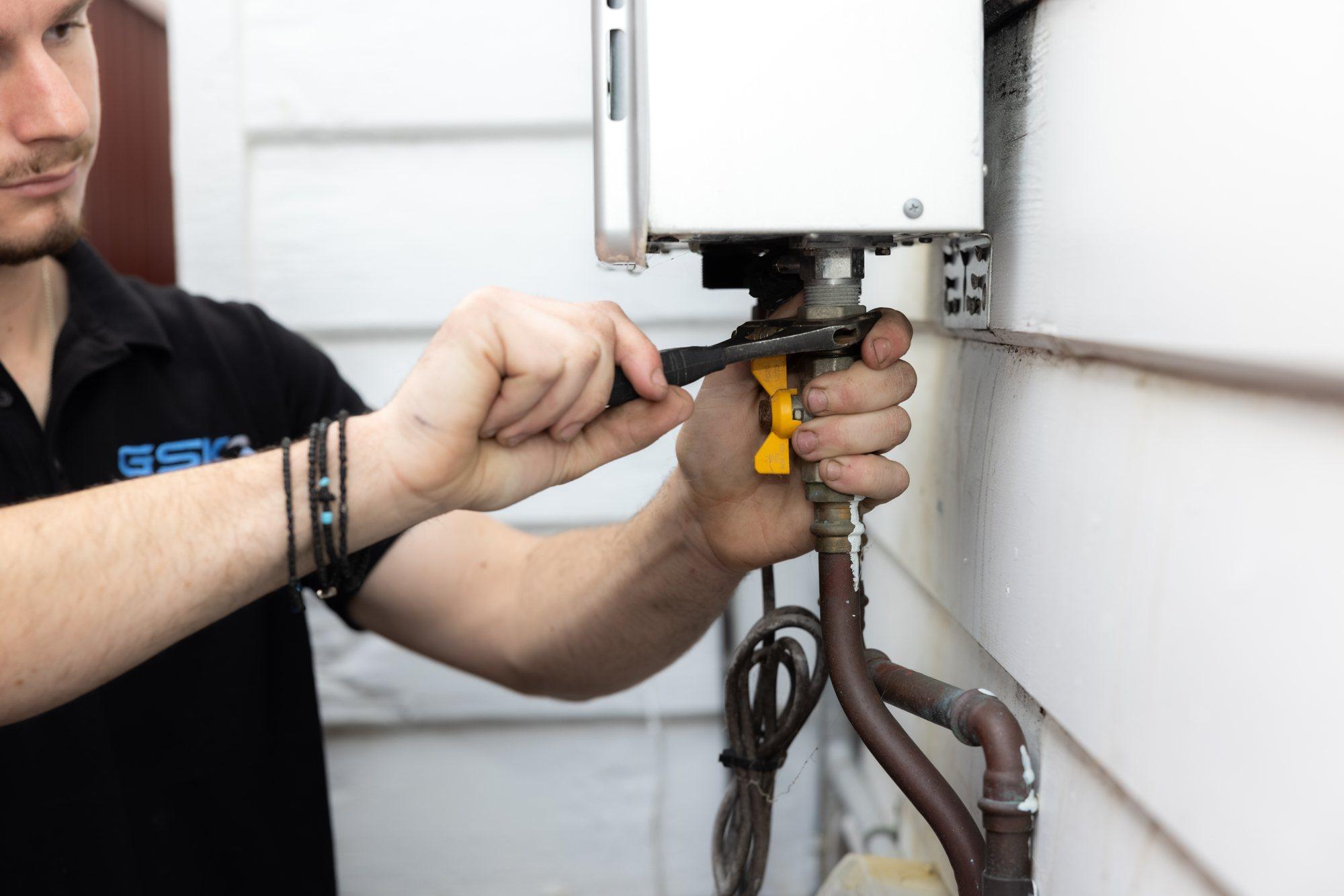
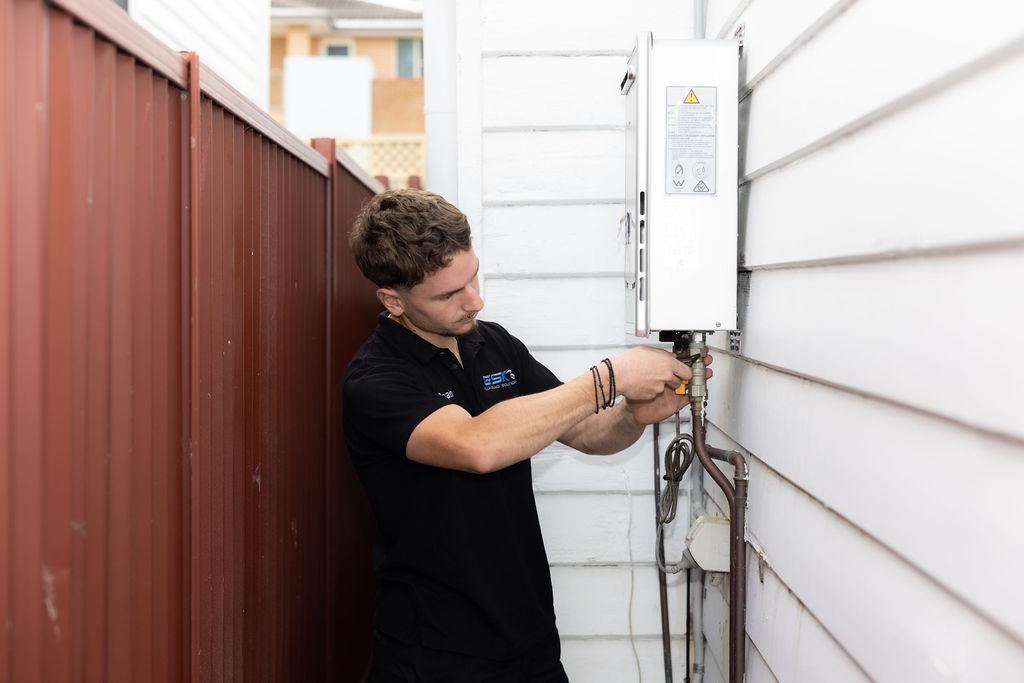
Continuous flow gas is the type most people now choose. You open the hot tap; a flow sensor fires the gas burner, and the unit heats the water as it passes through a heat exchanger. The water temperature is set at the unit, the supply does not run out, and because there is no tank there are no standing heat losses and no floor space taken up inside the house.
That endless supply is the genuine advantage of a gas unit. Gas also heats water faster than an electric element does, so a gas storage tank recovers more quickly after a run of showers. A family with teenagers and back-to-back showers notices both straight away. The trade-off is that you are buying energy at gas prices, you need an adequate gas connection, and you are burning a fossil fuel. Their electric counterparts carry no flame and no flue.
Solar Hot Water Systems And Solar Panels
Solar hot water systems use roof-mounted collectors to heat water directly, backed up by an electric element or a gas booster for cloudy stretches and winter mornings. They are a proven way to cut water heating energy use, and they draw on renewable energy you are not billed for.
There is a second and increasingly common path. If you already own solar panels, you don't need solar collectors as well. You can run a heat pump on a timer through the middle of the day and heat the tank using your own solar power, turning an insulated tank into a cheap thermal battery.
That combination is the reason heat pump hot water systems keep coming up in conversations with homeowners who have an existing solar PV system.
Gas vs Electric Hot Water Running Costs And Long Term Savings
Annual running costs come down to three things: how much energy the system needs to heat water, what you pay for that energy and how much heat the system loses while doing nothing.
On the first point, a heat pump is in a class of its own, because moving heat costs far less energy than creating it. A standard electric tank is at the other end. Gas sits in between, and continuous flow gas sits ahead of gas storage because it has no tank to keep warm.
On the second point, energy prices decide the rest. Electricity prices per unit are higher than gas prices per unit, which is exactly why an inefficient electric element is expensive to run and an efficient heat pump is not. If you have solar panels, the electricity you use in the middle of the day is cheaper again. If you are on an off peak tariff, an electric tank heats overnight at a lower rate, which softens its disadvantage.
The third point is the one people forget. A tank loses heat through its walls every hour of every day. A continuous flow unit does not have that loss at all.
There is also a cost that has nothing to do with energy. If your home has gas, you are paying a daily supply charge for the gas connection whether you use much gas or not. For a household where hot water is the only remaining gas appliance, dropping that connection cost can matter as much as the energy itself, and that is worth checking on your own energy bills before you decide.
What That Means For Long Term Savings
Upfront costs and long term savings pull in opposite directions, and that is the whole decision in one sentence.
A standard electric tank is the cheapest to buy but the most expensive to run. A heat pump costs more upfront but is the cheapest to run. Continuous-flow gas sits somewhere in the middle for both purchase and running costs while providing hot water on demand.
The longer you plan to stay in the house, the more the running cost side of that trade should decide it. If you are selling next year, the install cost matters more.
Rising gas prices and grid decarbonisation both push the long-run maths towards electric, and that is the direction most new homes are being built. It is a reasonable thing to factor in, though I would not replace a healthy system early on the strength of it.
Water heating is one of the largest energy users in a typical home, which is why this choice is worth a bit of thought. The federal government's guide to hot water systems sets out how each type works and what to weigh up.
Side-By-Side Comparison Of Hot Water Systems
| Feature | Electric storage tank | Electric heat pump | Gas continuous flow | Gas storage |
|---|---|---|---|---|
| How it heats water | Electric element inside a storage tank | Extracts heat from the surrounding air | Gas burner fires as water flows through | Gas burner heats a stored tank |
| Energy efficiency | Lowest | Highest of the mains options | Good | Moderate |
| Upfront cost | Lowest | Highest | Moderate | Moderate |
| Running costs | Highest, unless on an off peak tariff | Lowest | Moderate | Moderate |
| Runs out of hot water? | Yes, once the tank is drained | Yes, once the tank is drained | No | Yes, once the tank is drained |
| Needs a gas connection | No | No | Yes | Yes |
| Works with your own solar panels | Partly, on a timer | Very well, on a timer | No | No |
| Indoor floor space | Tank, indoor or outdoor | Tank plus a fan unit, outdoor | Compact wall unit, outdoor | Tank, usually outdoor |
| Greenhouse gas emissions | Falls as the grid cleans up | Lowest, lower again with solar power | Direct emissions from burning gas | Direct emissions from burning gas |
| Noise | None | A low hum when the fan runs | None to speak of | None |
A note on the emissions row, because it is often misread. Electric systems carry no greenhouse gases at the house itself, so their footprint depends on how the grid generates the power, and that footprint keeps dropping. Gas systems release greenhouse gas emissions at your home every time they fire, and that figure does not improve over time.
Government Rebates And Energy Ratings
Hot water is one of the better-supported upgrades in Australia, and the support mostly points at the efficient end of the market.

Eligible heat pump and solar hot water installations can create small-scale technology certificates under the federal scheme administered by the Clean Energy Regulator, which installers usually take off the invoice as a discount rather than paying you later. State and territory programs sit on top of that and change from time to time, so check what is current for NSW before you commit to a system.
Energy ratings are the other thing worth reading. Water heaters sold here have to meet minimum energy performance requirements, and the government's water heating information for consumers explains how the ratings work so you can compare two units honestly.
Ask your installer in writing which rebates they have applied and which they have not. The gap between the sticker and the final invoice is almost always rebates, and you want to know that rather than guess.
Installation, Space And What Your Home Already Has
The best system on paper is not always the best system for your house, and the reasons are usually physical.

Gas availability: No gas at the street means gas is off the table, and running new gas lines is a serious cost. If you do have gas, the existing line still has to be sized for a continuous flow unit, which draws more gas than an old storage heater.
Electrical capacity: A heat pump runs on a normal circuit, but a changeover from gas to electric often needs a new circuit run to wherever the unit is going. An electric swap is generally the easier and cheaper install of the two, because gas work has to be done by a licensed gasfitter and the gas line itself has to be checked and sized.
Where the unit can sit: A heat pump needs outdoor air around it and a little clearance for the fan, and it should not sit directly outside a bedroom window. A continuous flow gas unit is a small box on an external wall and needs clear space for its flue.
Drainage and relief lines: Any tank needs a safe path for its relief valve discharge, and a heat pump needs a condensate drain as well.
What you are replacing: A straight swap of like for like is the quickest and cheapest job. Changing fuel or changing from a tank to a wall unit means new pipework, new electrical or gas work and sometimes patching the wall.
Routine maintenance is light for all of them but it is not nothing. Tanks have a sacrificial anode and a relief valve that should be checked periodically. Continuous flow units need their filter and burner kept clean. Heat pumps need the air inlet and coil kept clear of dust and leaves.
In NSW this work is licensed. Plumbing, drainage and gas fitting work has to be done by a licensed tradesperson, and NSW Fair Trading is where you can confirm that the person quoting is licensed for the work. Our licensed team handles the gas fitting side as well as the plumbing, so a changeover does not need two separate trades.
How To Choose: A Short Decision Guide
Here is the order I work through it on-site. Each step narrows the choice, so by the last one you should have a clear idea which way to lean.
- 1
Check what fuel you have. No gas connection, and the choice is between an electric tank and a heat pump.
- 2
Check whether you own solar panels. If you do, a heat pump on a daytime timer is very hard to beat.
- 3
Count the hot water peaks, not the people. Four people who shower at four different times are easy. Four people who shower in the same half hour are the case for continuous flow.
- 4
Decide how long you are staying. Staying put favours the efficient option. Selling soon favours the cheap install.
- 5
Look at where the unit can physically go. Clearances, noise and the flue decide more jobs than people expect.
- 6
Ask what rebates apply to each option. Compare the real out-of-pocket numbers, not the list prices.
- 7
Check the age of the existing system. If it is near the end of its life, plan the replacement now rather than in the middle of a cold snap.
When To Call A Professional
Some signs mean the decision is about to be made for you, so it's better to get in front of them.
Rusty or discoloured water from the hot tap, water pooling under the tank, a relief valve that drips constantly, a burner that will not stay lit or hot water that has gone lukewarm and stayed there all point to a system near its end.
Gas work and the electrical side of a changeover are both licensed trades for good reason, and sizing is not guesswork either. An undersized continuous flow unit will drop its temperature when two showers run, and a heat pump squeezed into a tight corner will work harder and cost more than it should. Those are the two mistakes we most often get called in to fix, and both are decided before anything is installed.
Gas vs Electric Hot Water FAQs
It depends on which electric system you're comparing. A standard electric tank is the most expensive mains option to run, so gas comes out cheaper. A heat pump is a different story, because it moves heat instead of making it, which makes it cheaper to run than gas. Add your own solar panels and the heat pump pulls even further ahead.
Gas is not switched off in existing homes in NSW, and we still install and repair gas systems every week. New-build rules and rebate programs around the country are steadily favouring electric, so gas is being discouraged in new homes rather than removed from old ones. If your gas system is healthy, there is no need to rush.
For a big family with overlapping showers, a continuous flow gas unit is the easiest answer because it cannot run out. A heat pump suits a large household too, as long as the tank is sized for the peak and it has time to recover between demands.
Yes, and it is a common job. It usually means a new electrical circuit to the unit, new pipework and a decision about whether any other gas appliances are staying. If hot water was the last gas appliance in the house, you can also look at dropping the gas connection and its daily supply charge.
Yes. Sydney winters are mild by heat pump standards, and units sold here are built to keep working in cold weather, falling back on an electric element in the worst conditions. Efficiency drops a little on the coldest mornings, which is normal and not a fault.
Lifespan varies by type and by how hard the water and the household are on it. A well-maintained tank, a continuous flow unit and a heat pump can last 8 to 20+ years, and the single biggest factor is routine servicing. Neglected anodes and blocked filters end more systems early than anything else.
If you would rather read about what is involved first, our hot water services page covers repairs, replacements and changeovers across southern Sydney.

Need help choosing the right hot water system?
Get expert advice and fast, licensed hot water installation and replacement across southern Sydney.