Every gas appliance installation in Sydney has to be done by a licensed gas fitter, tested for leaks before it's switched on and signed off with a gas compliance certificate. That applies whether it's a new gas cooktop, a freestanding oven, a gas heater or a BBQ point, and it applies to natural gas and bottled LPG alike.
I'm George, and our team at GSK Plumbing Solutions handles gas work for homes across Hurstville and the St George area of southern Sydney. Below I explain what a proper gas appliance installation involves, what to check before you buy a new appliance, the paperwork you should get at the end and the warning signs of a bad install.
Why Gas Appliance Installation Needs a Licensed Gas Fitter
Gas is the one part of a home's plumbing where a small mistake becomes a safety problem. A loose fitting leaks, the wrong regulator setting changes the flame and poor ventilation lets combustion gases build up indoors.
That's why gas work in New South Wales is licensed separately from general plumbing. Only licensed gas fitters can connect appliances to the gas supply, and you can check a tradesperson's licence with NSW Fair Trading before they start.
A handyman or the delivery driver can't legally connect a new gas stove, even when the bayonet fitting looks simple. Most appliance manufacturers also make a licensed installation a condition of the warranty.
Common Gas Appliance Installations in the Home
These are the jobs we do most often, and what each one usually involves.
| Appliance | What the installation involves | Typical things to check first |
|---|---|---|
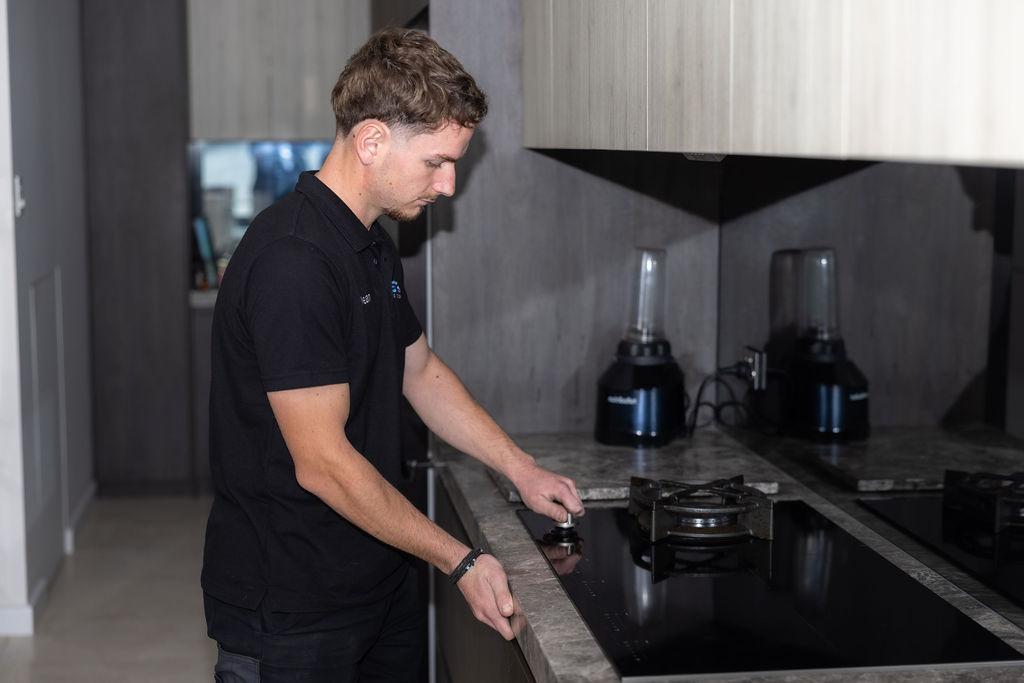
| Gas cooktop | Connect to the existing gas line, set the regulator, test every burner | Bench cut-out size, distance to the rangehood |
| Gas oven or freestanding oven | Flexible hose connection, anti-tilt bracket, flame and seal checks | Space behind the oven, gas point location |
| Gas heater | Bayonet or fixed connection, ventilation and flue checks | Room size, ventilation requirements, flue route |
| Gas hot water | Gas and water connections, relief valve, commissioning | Gas pressure and meter capacity |
| BBQ or outdoor kitchen | New gas point outside, isolation valve | Natural gas or LPG, distance from the meter |
Changing from LPG to natural gas, or the other way round, usually means a conversion kit for the appliance. Not every model can be converted, so it is important that you should check before you buy.
What Happens During a Gas Appliance Installation
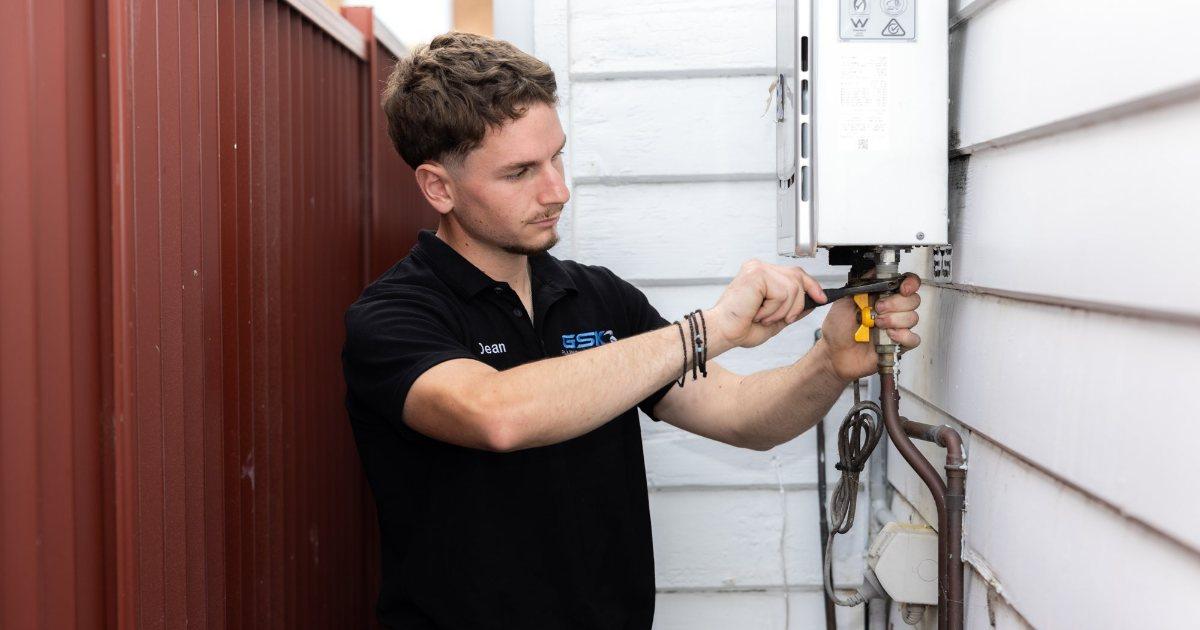
A proper gas installation follows the same order every time. Here's what happens from the moment we arrive to the moment we hand it over to you:
- 1
Check the gas supply: We confirm the existing gas line and meter can carry the new appliance alongside the other gas appliances in the house.
- 2
Safely disconnect the old appliance: The old unit is isolated, capped and removed if you're replacing one.
- 3
Connect the new appliance: With the right fittings for that model, and secure connections at every joint.
- 4
Set the gas pressure: The regulator is adjusted to the manufacturer's specification so the flame burns clean and blue.
- 5
Test for gas leaks: The line is pressure tested and every joint is checked before the appliance is used.
- 6
Commission and explain: We light every burner or element, confirm it is working properly and show you the controls.
Installation time depends on the job. A like-for-like swap is quick, while a new gas line to a kitchen or outdoor area takes longer.
The Gas Compliance Certificate
At the end of any gas work, you should be given a gas compliance certificate. It records what was installed, who did the job and that it was tested.
Keep it with your home paperwork. You'll want it for insurance, for warranty claims and when you sell, as buyers and agents increasingly ask for compliance paperwork on gas appliances.
If a gas plumber finishes a job and leaves without a certificate, ask for it before you pay.
Before You Buy a New Gas Appliance
A few quick checks before you buy can save you a second visit and an appliance that doesn't suit your home.
- Natural gas or LPG: Most appliances ship set up for one or the other.
- Gas point location: A new appliance in a different spot may need the gas line extended.
- Ventilation: Heaters and some cooktops have ventilation requirements set by the gas installation standard, AS/NZS 5601.
- Space and clearances: Follow the manufacturer's measurements, especially for a freestanding oven or a cooktop under a rangehood.
- Electrical connection: Many gas appliances still need a power point for ignition or a fan.
Signs a Gas Appliance Wasn't Installed Properly
If you notice any of these signs, have the appliance checked straight away:
- A yellow, orange or flickering flame instead of a clean blue one
- Burners that won't light or keep cutting out
- A gas smell near the appliance, the hose or the meter
- Soot marks or black staining around the appliance
- No compliance certificate was ever supplied
If you smell gas, turn off the appliance, shut off the gas at the metre, open doors and windows and don't use switches or open flames. In Sydney, gas leaks and emergencies are reported to the network operator, Jemena, on 131 909.
Gas Appliance Installation FAQs
You need a licensed gas fitter. Many plumbers hold a gas fitting licence as well, so ask to see it before the job starts.
No. Connecting any gas appliance to the gas supply is licensed gas work in NSW, even a simple bayonet connection.
It depends on whether the gas line is already in the right spot, the type of appliance and whether an old unit needs to be disconnected. We give you the price after we've seen the job and before any work starts.
Some states and councils are moving new homes towards electric appliances to cut emissions. Existing gas connections in Sydney homes keep working, and gas appliances can still be installed, serviced and repaired.
Yes. Replacing an appliance is gas work, so it should come with a compliance certificate just like a new installation.
Our gas fitting page covers the gas work we do, and if your next appliance is a gas hot water system, see our hot water services.

Need Gas Appliance Installation in Sydney?
Get fast, licensed gas cooktop, oven, heater, and hot water installations with leak testing and compliance certificates across Hurstville and the St George area.