Low hot water pressure almost always has one of five causes: sediment in the hot water tank, a failing tempering valve, a half-closed isolation valve, a clogged aerator or a corroded length of pipe. If cold runs strong and only the hot side has dropped off, the problem sits between your water heater and the fixture rather than in the mains supply.
I'm George, and our team does residential maintenance plumbing in Hurstville and across the St George area of southern Sydney. Below I cover how to compare hot and cold water pressure, the signs that point to each cause, the simple checks you can do yourself and the solutions that need a licensed plumber.
Start by Comparing Hot and Cold Water Pressure
Begin by working out whether this is a hot water problem or low water pressure right through the house.
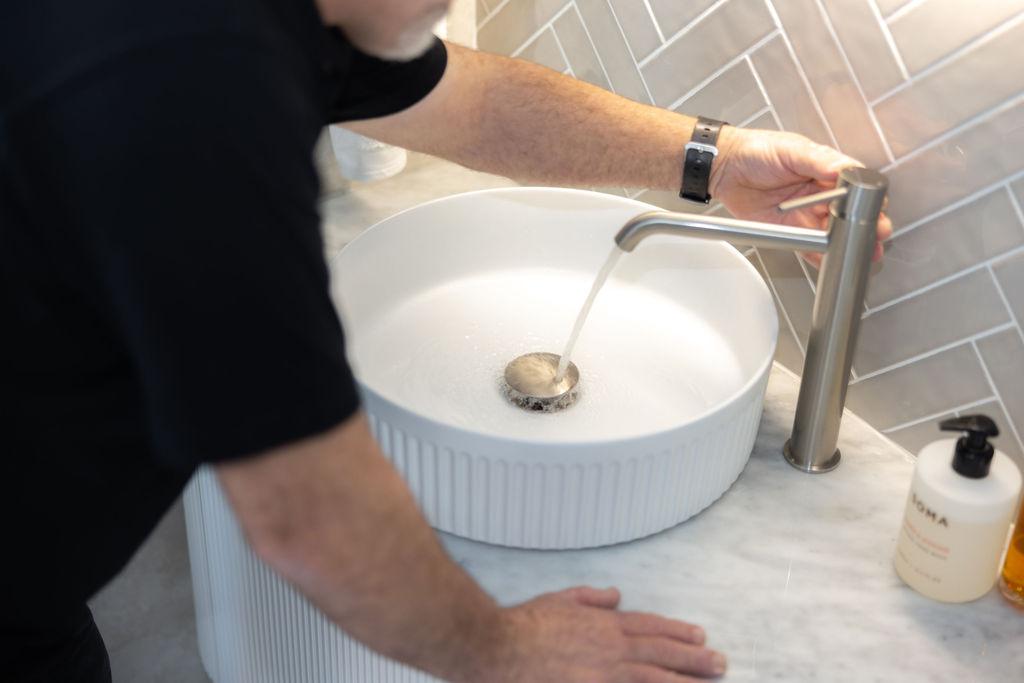
Run the cold water at your kitchen sink and watch the flow. Then run the hot at the same fixture and compare.
If both are poor, your household water pressure is the problem and the cause typically sits upstream at the metre or a pressure regulator. If only the hot side has dropped, the restriction is somewhere on the hot line.
Measure Water Flow With a Bucket
You don't need special tools for a rough test.
- 1
Put a 10 litre bucket under the kitchen tap and note the time.
- 2
Open the hot tap fully and time how long the bucket takes to fill.
- 3
Repeat on cold at the same fixture.
- 4
Do the same in the shower.
One slow fixture and the rest fine means the fault is at that fixture. Poor flow at every hot fixture in the house points to the water heater or the main hot line.
A screw-on water pressure gauge from a hardware store gives you a proper reading if you want one. We bring a gauge to every hot water call anyway, so the bucket test is plenty to start with.
What Causes Low Hot Water Pressure in Sydney Homes
These are the common problems we find, and the signs that go with each.
| Symptom | Likely cause | Typical solution |
|---|---|---|
| Weak hot flow everywhere, rumbling tank | Sediment in the hot water tank | Flush or service the tank |
| Hot water lukewarm and slow | Faulty tempering valve | Replace the valve |
| One tap or shower slow | Clogged aerator or showerhead | Clean or replace the fitting |
| Pressure dropped after recent plumbing work | Isolation valve left part closed | Open it fully |
| Rusty water and falling flow | Corroded pipes | Repair the pipe section |
Sediment in the Hot Water Tank
Minerals settle out of the water as it heats, and over the years they collect in the base of a storage hot water heater. That sediment narrows the outlet and restricts flow.
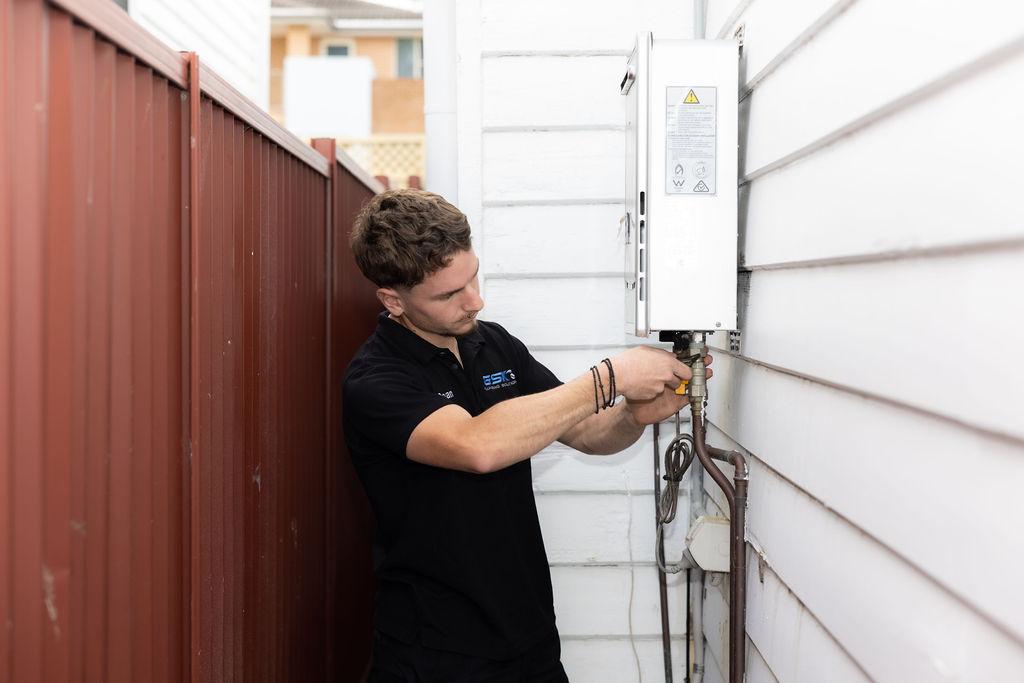
A rumbling or popping noise as the unit fires is the usual giveaway. Discoloured water on hot only is a second sign.
Sediment and mineral deposits are the leading cause we see in older tanks, and worse where water sits unused for long stretches. Flushing the tank clears it and often restores the pressure on its own.
A Faulty Tempering Valve
A tempering valve blends cold into the hot line so the water reaching your bathroom cannot scald.
When it sticks or fills with debris, it chokes the flow. The giveaway is hot water that arrives both slow and cooler than the thermostat setting, often in the bathroom while the kitchen runs fine.
Tempering valves wear out, and they have to be installed by a licensed plumber. Replacing one is a straightforward job and it restores both temperature and pressure.
Clogged Taps, Shower Heads and Filters
Aerator screens and the nozzles on shower heads catch grit, pipe scale and rust.
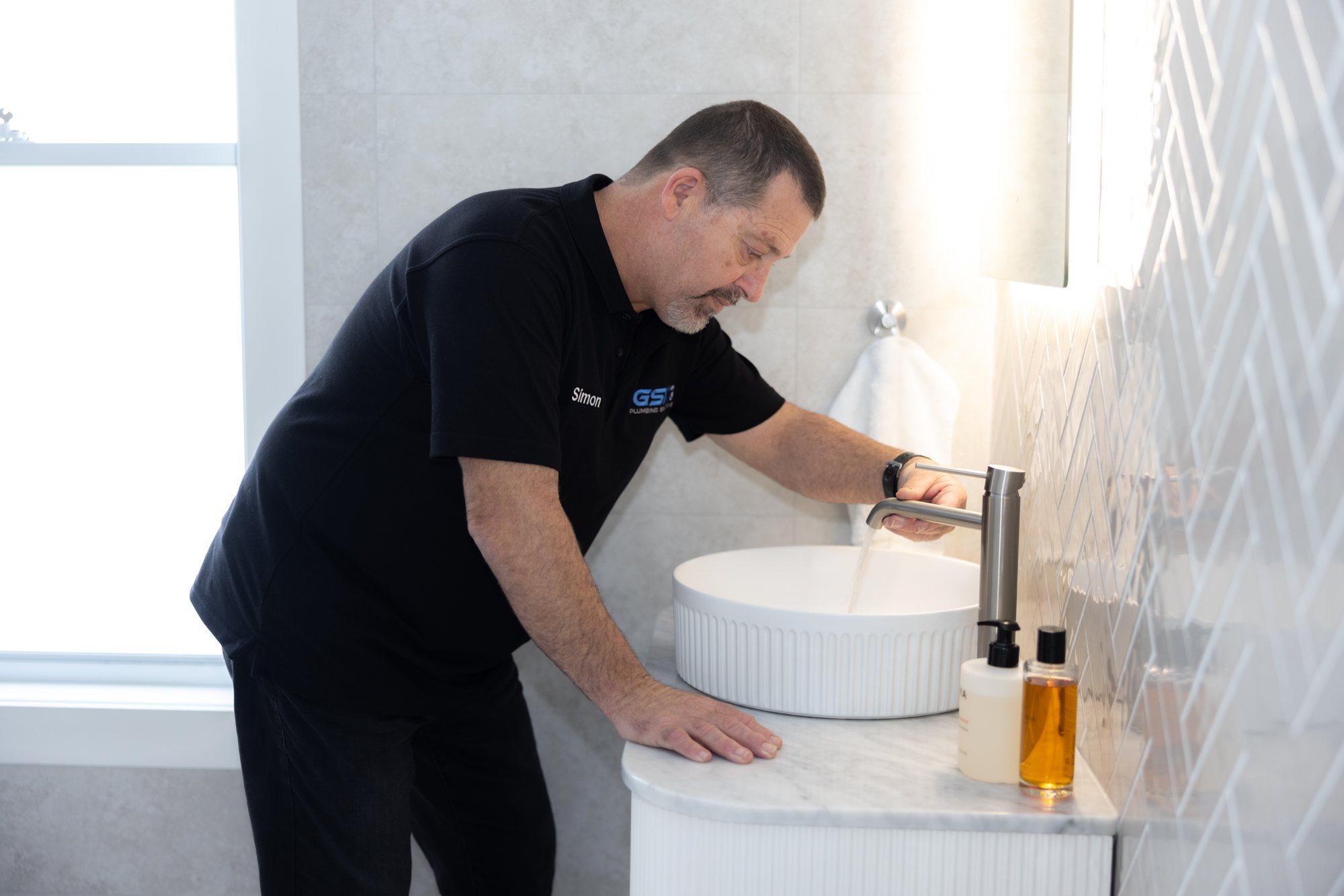
If only one fixture is affected, this is the simple fix to try first. Inline filters under the sink and the strainers inside angle stop valves clog in the same way, so they're worth checking too.
Blockages, Pipes and Leaks
An isolation valve that was never fully reopened after plumbing work will quietly throttle the hot side and leave low pressure right through the house.
Old galvanised pipe corrodes from the inside, and a partial blockage on the hot line shows up as flow that falls away over months. A hidden leak does the same, so check around the unit and for damp patches on walls. Our burst pipes page covers what a leak on the hot line looks like.
How the Water Heater Itself Affects Pressure
Storage and continuous flow units behave differently, and that changes the answer.
A storage water heater delivers at the pressure its valves allow, so a failing relief valve or a blocked cold inlet starves it. A continuous flow water heater needs a minimum water flow before it will fire, so a clogged inlet filter leaves lukewarm water at low pressure.
Hot water is one of the biggest energy users in the average Australian home, so a heater fighting a restriction costs you twice. The Australian Government's energy advice for households is worth reading if a replacement is on the cards.
Fixing Low Hot Water Pressure at Home
Before you book anyone, a few simple checks can show you whether it's a quick fix or something that needs a plumber.
- Check the isolation valve at your hot water system is open all the way.
- Unscrew the aerator from the slow tap, rinse the screen and refit it.
- Soak a clogged showerhead in white vinegar to dissolve mineral deposits, then flush it.
- Look for drips around the unit, under the sink and along visible pipes.
- Test a second hot fixture so you know whether it is one fitting or the whole home.
Leave the rest alone. Draining a tank, touching gas or opening a tempering valve is licensed work, and in New South Wales, plumbing and drainage work must be carried out by a licensed tradesperson.
When to Call a Plumber
These are the signs to stop testing and call a plumber: weak hot flow everywhere, rusty water, a noisy water heater or water pooling near the unit. None of it is unusual, and most of it is a repair rather than a replacement.
If the restriction is in the pipework we put a camera down the line to see it, and clear what we find with high pressure jetting. Guesswork gets expensive, so we locate the blockage before anything is cut.
Age can also play a part. When repairs keep stacking up on an older water heater, the unit is usually near the end, and any newly installed system has to meet the standards set by the Plumbing Code of Australia .
When you contact us, say which taps are affected, whether cold is involved and what you have already checked. It saves time on site. You can also see what we handle in a home or a business on our hot water services page.
Preventing Low Water Pressure on the Hot Side
Most hot side pressure problems build up slowly, which means a little regular maintenance goes a long way. Here's what I'd keep on top of in your home:
- Flush the tank yearly: It clears sediment before it chokes the outlet.
- Have the tempering valve inspected yearly: It wears slowly, so the drop in pressure creeps up on you.
- Clean aerators and shower heads: A rinse every few months stops grit collecting.
- Fix small drips early: A dripping tap wastes water and hides a slow loss of pressure. Our leaking taps page explains when a new washer is enough.
Low Hot Water Pressure FAQs
Because the cause sits on the hot side only. The familiar culprits are sediment in the hot water tank, a blocked tempering valve or an isolation valve that is not fully open.
Once a year suits most Hurstville homes. Heat pump and solar tanks are better left to a plumber, since the controls and pipework make it more of a challenge.
Yes, if the weak flow is confined to that shower. Nozzles clog with scale and rust, and cleaning or replacing the head usually restores the flow.
Clear the aerator and confirm the isolation valve is fully open. If both are fine, the restriction is further back in the pipes and tracing it is a job for a plumber.
Not usually. Sediment, valves and clogged fittings cause most cases and all are repairable, though a unit needing frequent repair is worth replacing.
Not on its own. It becomes urgent alongside pooling water, a straining water heater or the smell of gas, in which case shut off the supply and contact us.

Need help with low hot water pressure?
Get fast, reliable hot water repairs, valve replacements, and tank servicing across Hurstville and the St George area.