You hear it late at night: a faint, continuous hissing or trickling sound drifting from the bathroom long after everyone has flushed. It seems harmless enough. But that barely audible sound is quietly driving up your water bills, wasting thousands of litres every month, and putting unnecessary strain on Sydney's already precious water resources.
A running toilet is one of the most common and most underestimated household plumbing problems. Unlike a burst pipe or a visibly dripping tap, it can be hard to spot. Most Sydney homeowners don't notice it until a quarterly water bill arrives with an unexpected spike.
At GSK Plumbing Solutions, we regularly help homeowners across Sydney and surrounding suburbs diagnose and fix these issues before they become costly, long-term problems. In this blog, we'll break down exactly how much water your toilet could be wasting, how to spot hidden leaks, what's causing the problem, and when it's time to call a professional.
How Much Water Does a Running Toilet Actually Waste?
Daily and Weekly Statistics
So does a running toilet waste water? The short answer: absolutely, and far more than most people realise.
A standard running toilet can waste anywhere from 50 to 400 litres per day. That's up to 1,400 litres a week. In severe cases, where water is constantly trickling through a failed seal or valve, the waste can climb into the thousands of litres per day.
Over a standard 90-day billing quarter, even a moderate leak can result in tens of thousands of litres disappearing silently down the drain. And because Sydney Water bills are calculated on consumption, that waste translates directly into hard dollars on your next invoice, making running toilet repair one of the smartest investments a Sydney homeowner can make.
Financial and Environmental Impact
Many Sydney homeowners are genuinely surprised to discover just how quickly water losses from a faulty cistern add up. A toilet wasting 150 litres per day contributes roughly 13,500 litres of unnecessary consumption to your quarterly bill, a significant and entirely avoidable expense.
Beyond the financial impact, there's an environmental responsibility to consider. Greater Sydney regularly faces water storage pressure, seasonal usage restrictions and the growing effects of climate variability. Fixing a leaking toilet isn't just about saving money; it's a practical contribution to responsible water use across the wider community.
The "Silent Leak" Test: How to Detect Hidden Toilet Leaks
Not All Leaks Make Noise
Here's what surprises many Sydney homeowners: not every running toilet makes an audible sound. In many cases, water trickles slowly and silently from the cistern into the bowl, completely invisible to the eye and inaudible to the ear.
This kind of invisible problem, sometimes called a leaking toilet cistern, can persist for months without detection, quietly racking up water usage and contributing to steadily climbing water bills.
The Food Colouring Test (Step-by-Step)
Before calling a plumber for leaking toilet problems, try this simple home test to confirm whether your cistern is leaking silently:
- 1
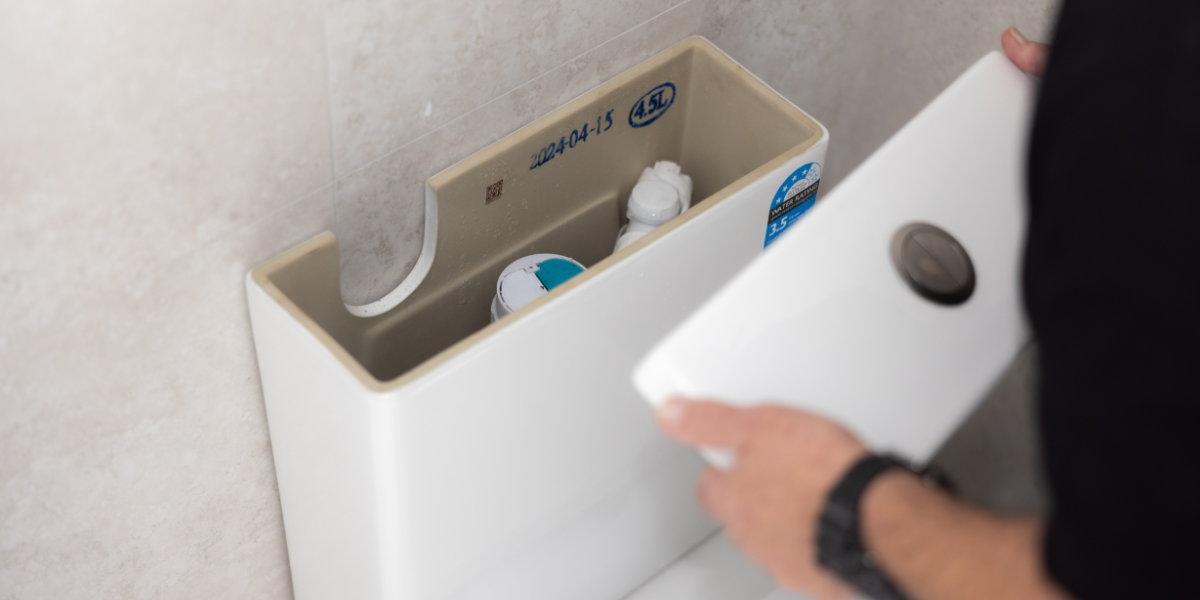
Remove the cistern lid carefully and set it aside.
- 2
Add several drops of dark food colouring (blue or red works well) directly into the cistern tank. Do not put it in the bowl.
- 3
Wait 15 minutes without flushing.
- 4
Check the toilet bowl. If any colour appears in the bowl water, you have a confirmed silent leak somewhere in the cistern.
This test costs nothing and takes less than 20 minutes. If the dye shows up, the cistern has a seal failure, and it's time to investigate the cause or contact a licensed plumber.
Top 4 Causes of a Running Toilet
1. Worn or Warped Flapper
● What it is:
The flapper is the rubber seal on the bottom of the cistern tank. It rises up when you flush and falls back down to close a watertight seal while the tank is filling.
● Why it fails:
Over time, Sydney's water supply, which contains chloramines and other treatment additives, can degrade rubber components. Mineral buildup and general age cause the flapper to warp, crack, or harden, preventing it from seating properly. Even a tiny gap in this seal allows water to trickle continuously into the bowl.
A worn outlet valve seal is a common cause of a running toilet and often one of the more straightforward repairs.
2. Faulty Fill Valve (Inlet Valve)
● What it is:
The fill valve, also known as the inlet valve, is the mechanism that controls the flow of water back into the cistern after a flush. Once the tank reaches the correct water level, the valve should shut off completely.
● Why it fails:
Mineral deposits and mechanical wear prevent the valve from closing fully. Water continues flowing into the tank and spills over into the overflow tube, a quiet, constant drain that's easy to miss and often contributes to a persistently leaking toilet cistern.
3. Improper Float Height or Chain Length
● Float issues:
The float is a buoyant device in the cistern that rises with the water level and triggers the fill valve to shut off. If the float is set too high, the water level exceeds the overflow tube height, and water drains away constantly, even when the toilet hasn't been used.
● Chain issues:
The flapper is connected by the chain of the flush handle, which needs to be precisely the right length. If it's too short, the flapper can't close all the way, and water leaks through. If it's too long, it can become trapped beneath the flapper and prevent a proper seal. Both scenarios keep your toilet running indefinitely.
4. Damaged Flush Valve Seat
● What it is:
The flush valve seat is the surface on which the flapper falls against to create a watertight seal.
● Why it fails:
In older toilets or in homes with hard water, mineral deposits and corrosion can cause pitting on the valve seat. Even a brand-new flapper won't seal against a rough or corroded seat; the surface itself must be descaled or replaced. This is a job for a licensed plumber.
DIY Fixes vs. When to Call Professional Plumbing Services
➥ Quick DIY Fixes
For minor issues, there are a few things confident DIYers can tackle themselves. If you're comfortable working around toilet cisterns, you may be able to resolve the issue with these steps as part of knowing how to fix a running toilet at a basic level:
- Adjust or replace the flapper chain: Reattach it to a different hook on the handle arm to correct the length.
- Replace a worn rubber flapper: Standard flappers are available at most Sydney hardware stores and can be swapped in under 30 minutes with no special tools required.
- Adjust the float level: Most modern floats have an adjustment screw or bendable arm. Lower the water level so it sits clearly below the overflow tube.
However, if the running continues after these fixes, the problem likely lies deeper in the flush valve or fill valve assembly.
➥ When to Call GSK Plumbing Solutions (Professional Running Toilet Repair)

Some running toilet problems go beyond DIY territory. You should contact a licensed plumber when:
- Replacing the flapper doesn't stop the running: This scenario points to a fill valve failure or a damaged valve seat requiring professional diagnosis.
- The flush valve or fill valve assembly needs replacement: These parts vary significantly between toilet models, as incorrect installation can cause further leaks or damage.
- You suspect water pressure issues: High water pressure in some Sydney suburbs accelerates wear on internal components and can cause recurring cistern problems.
- The leak is persistent or worsening: A toilet that keeps running despite repeated DIY attempts needs a professional inspection.
- You need an emergency plumber Sydney: If water is actively overflowing from the cistern or you've seen a sudden dramatic spike in water usage, don't wait. GSK Plumbing Solutions provides prompt, reliable service across Sydney and nearby areas, including same-day callouts for urgent plumbing issues.
If you're unsure whether your situation needs urgent attention, reaching out to a qualified plumber early for a leaking toilet is always the safer, more cost-effective choice. Catching the problem before it worsens avoids the risk of water damage and significantly larger repair bills down the track.
Conclusion
A running toilet is more than just annoying background noise; it's a significant, ongoing waste of Sydney's water and your household budget. When this is left unaddressed, even a moderate leak can waste thousands of litres of water and cost hundreds of dollars every single quarter.
The good news is that most cistern faults have fixable causes. Start with the food colouring test to confirm a leaking toilet cistern, check your flapper and float as first DIY steps, and know when the job calls for a licensed professional. Understanding how to fix a running toilet at a basic level saves time and money, but knowing when to call for help is just as important.
Contact us today for fast, reliable running toilet repair and expert residential plumbing across Sydney and surrounding areas. Our licensed plumbers will check the problem, fix it properly, and give you complete peace of mind.

Toilet running constantly and wasting water?
Get fast, licensed running toilet repair across Sydney to stop water waste and reduce your bills.